


Somatic yoga: the trend that slows yoga down, and why wool suits it so well
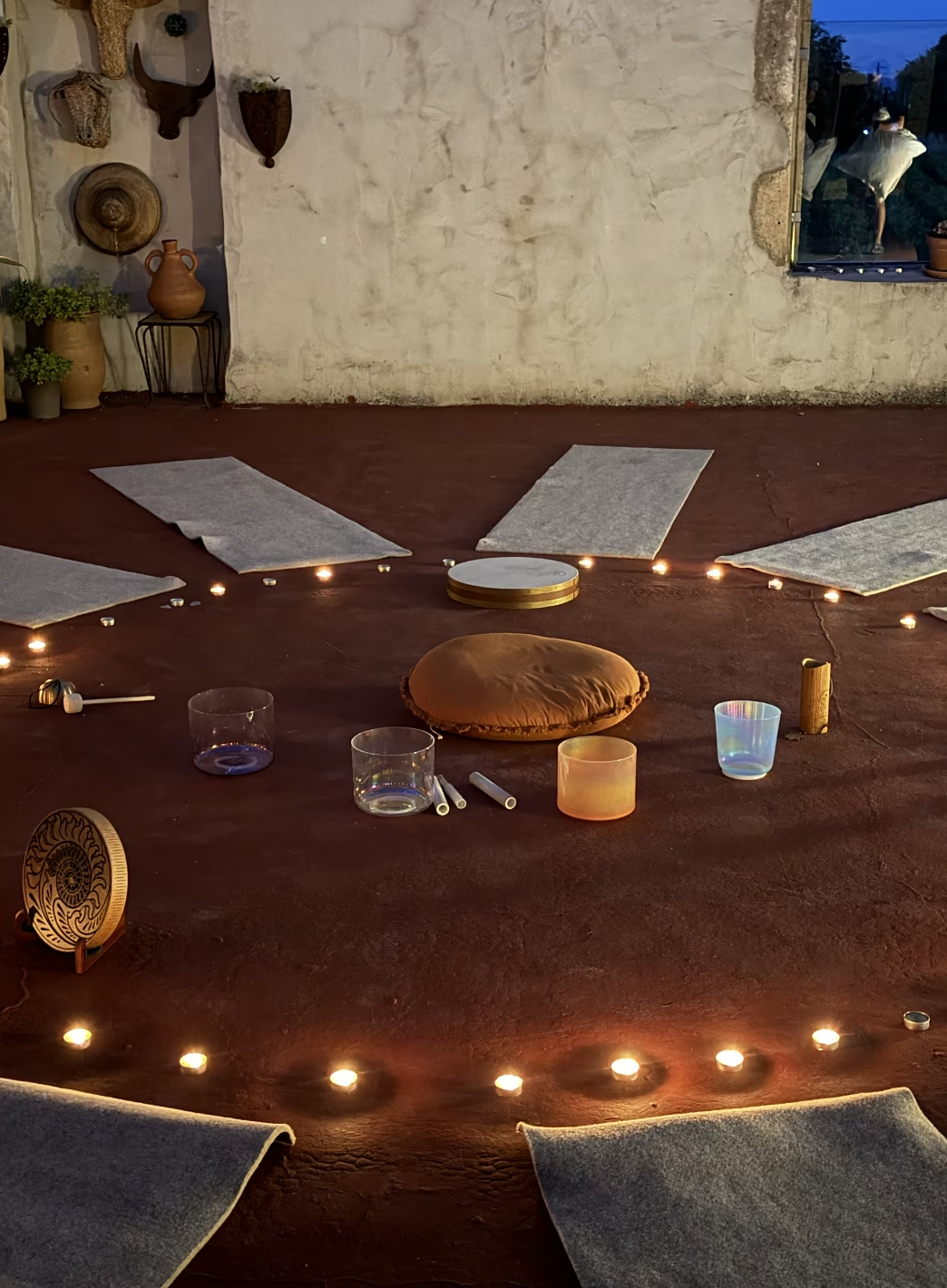
Somatic yoga is a way of practising yoga that puts what you feel on the inside ahead of the shape of the pose. The movements are slow, often done on the floor, and your attention stays on sensations, breath and points of contact.
The practice has spread since 2023, driven by social media and by growing interest in regulating the nervous system. Here you will find what it is, what studies measure about body awareness and slow breathing, a 20-minute routine and the reason a wool mat changes the experience.
What is somatic yoga?
The word “somatic” comes from the Greek sôma, the living body. The American philosopher Thomas Hanna coined the term somatics in 1976 and defined it as “the study of the self from one's own lived experience”. His book Somatics (1988) popularised the idea of retraining movement through sensation.
Somatic yoga applies this principle to the poses. You move slowly, through a small range, and observe what happens in your muscles and joints during the movement. Perfect alignment takes a back seat.
David Creel, PhD, an exercise physiologist at Cleveland Clinic, points to a drift in some of today's classes: “Some yoga teachers turn their classes into a strength-training workout.” For a somatic practice, he advises looking for “a class where the teacher focuses mainly on your thoughts, your sensations and your breathing”.
Why is somatic yoga a trend in 2026?
The trend stems from a wider interest in regulating the nervous system. In its 2026 yoga trends, the Global Wellness Institute notes that “the growing emphasis on neurowellness reflects a broader shift in wellness culture”.
The same report places yoga at the heart of this movement, thanks to its combination of pranayama, poses and meditation. It lists slow breathing, “often around six breaths per minute”, among the most studied practices.
Social media has accelerated the phenomenon. As early as 2023, “somatic workouts” were among the fast-rising Google searches, and by mid-2024 the hashtag #somaticworkout was approaching 30 million views on TikTok, according to Marie Claire.
What science says about body awareness
The ability to perceive your internal sensations has a name: interoception. It can be trained. In 2014, a team at the Max Planck Institute in Leipzig followed 148 adults through three months of contemplative training, with 20 minutes of body scan and 10 minutes of breath meditation, five times a week.
Compared with a control group of 80 people, participants improved on five of the eight dimensions of the MAIA scale, which measures interoceptive awareness. The largest gains were in self-regulation, attention regulation and body listening.
This work was not about yoga as such. It does show, however, that the central gesture of somatic yoga, bringing attention back to sensations, produces measurable changes within a few months.
Breathing at 6 cycles per minute
Slow breathing is the simplest tool in somatic yoga. In 2021, Sylvain Laborde (German Sport University Cologne) and his colleagues had 59 adults breathe at six cycles per minute, that is, a 4-second inhalation and a 6-second exhalation.
During the exercise, heart rate variability (measured by the RMSSD index), a marker of vagus nerve activity, increased compared with the control condition. Sessions of 5, 10, 15 and 20 minutes gave comparable results.
So five minutes is enough to get started. That is the duration used in the routine below.
Touch, the other way into somatic yoga
Somatic yoga also works through the skin. Researchers have identified particular nerve fibres, C-tactile afferents, found in hairy skin (arms, legs, back) and absent from the palms of the hands.
These fibres respond mainly to slow, light touch. A study from the University of Gothenburg (Ackerley, McGlone et al., 2014) highlights their likely role in the pleasant, emotional side of touch. Their activity closely tracks the pleasure felt on contact.
In practice, this offers a lead: slowly sliding your forearm or calf over a soft surface is one of the simplest explorations in a somatic session.
Why practise somatic yoga on a wool mat
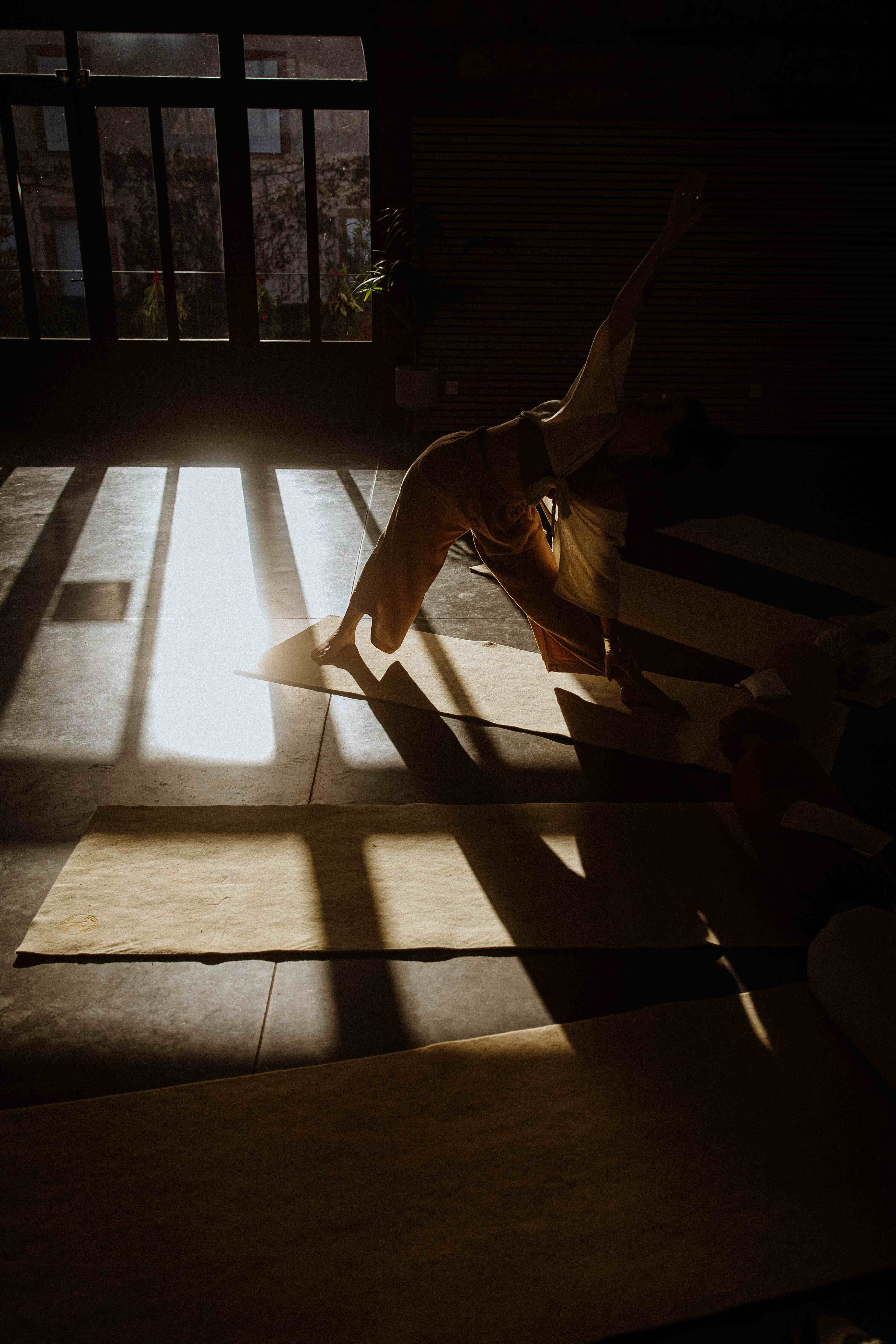
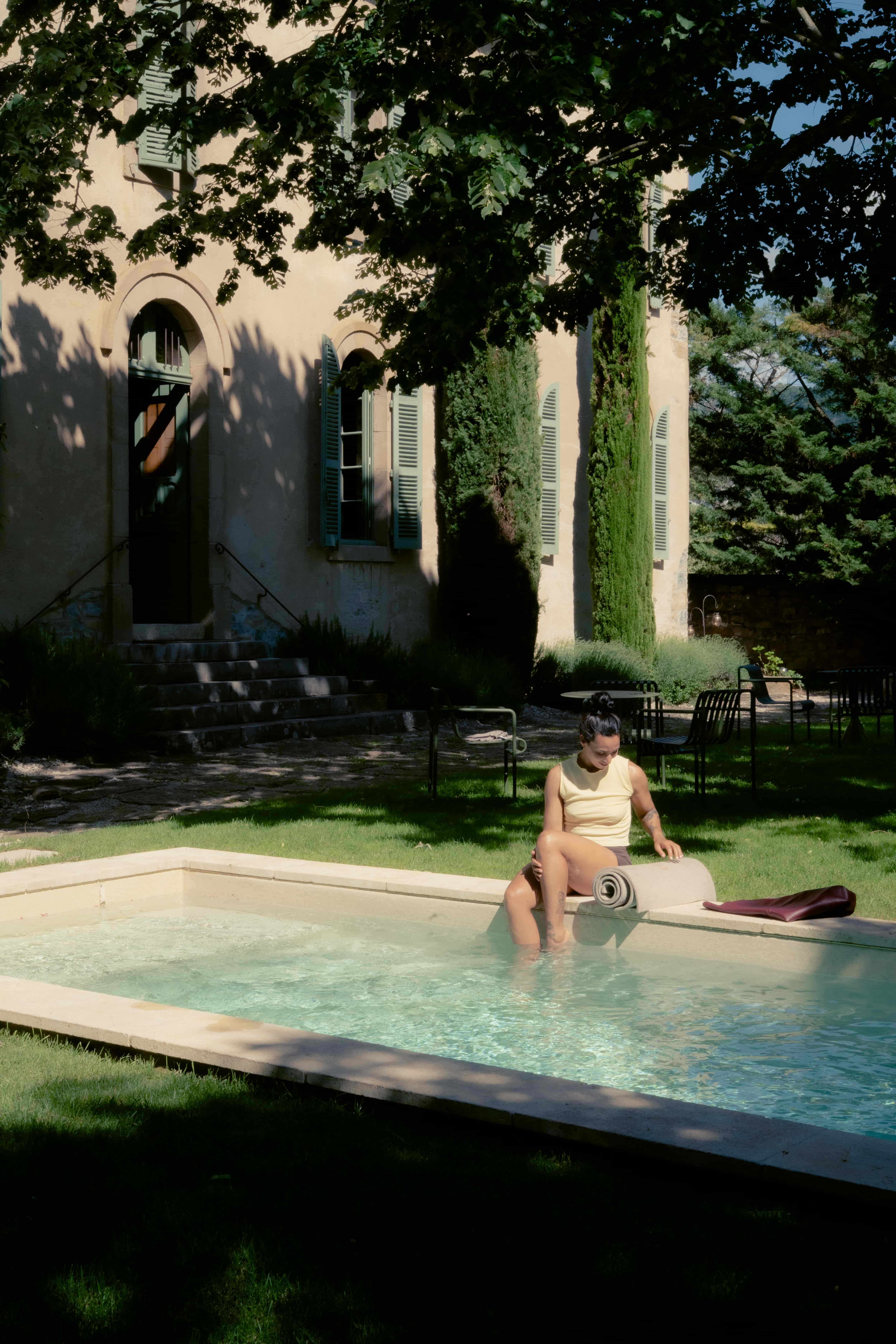
Somatic yoga is mostly practised lying down, sitting or on all fours. The body stays in contact with the mat for a long time, and the material of the mat becomes part of the sensory experience.
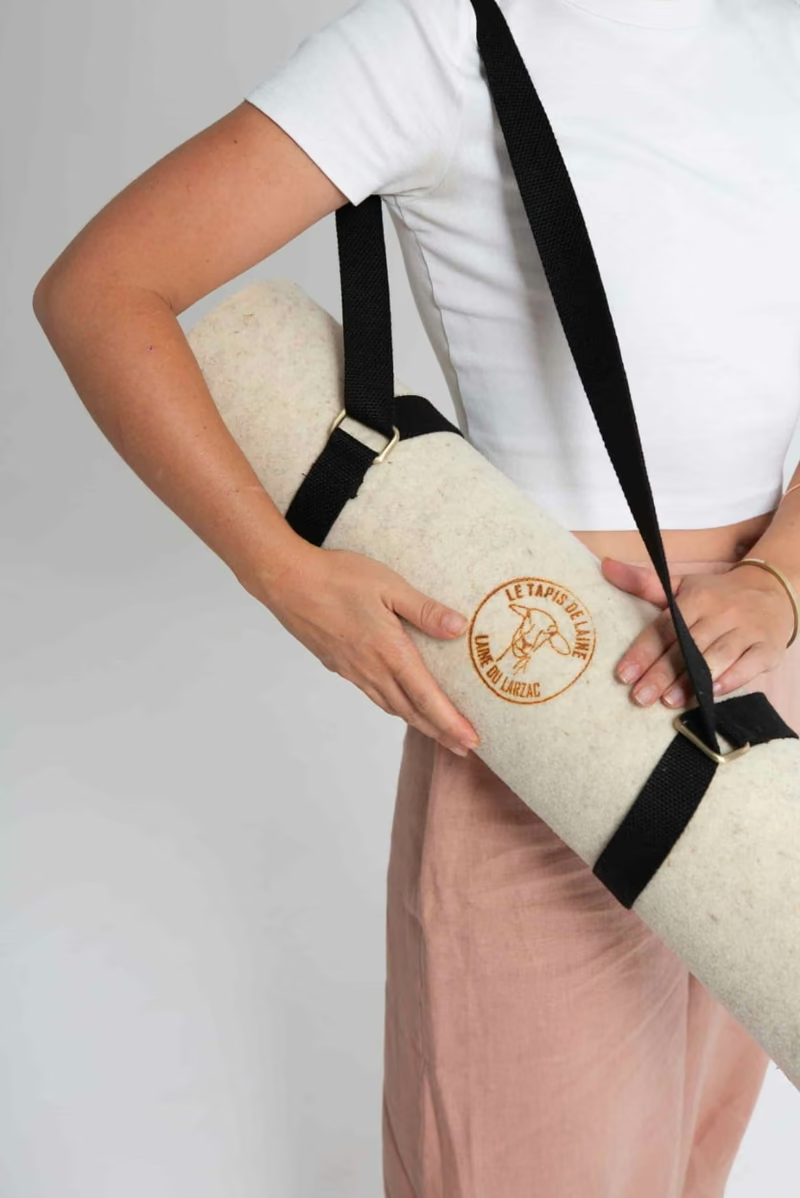
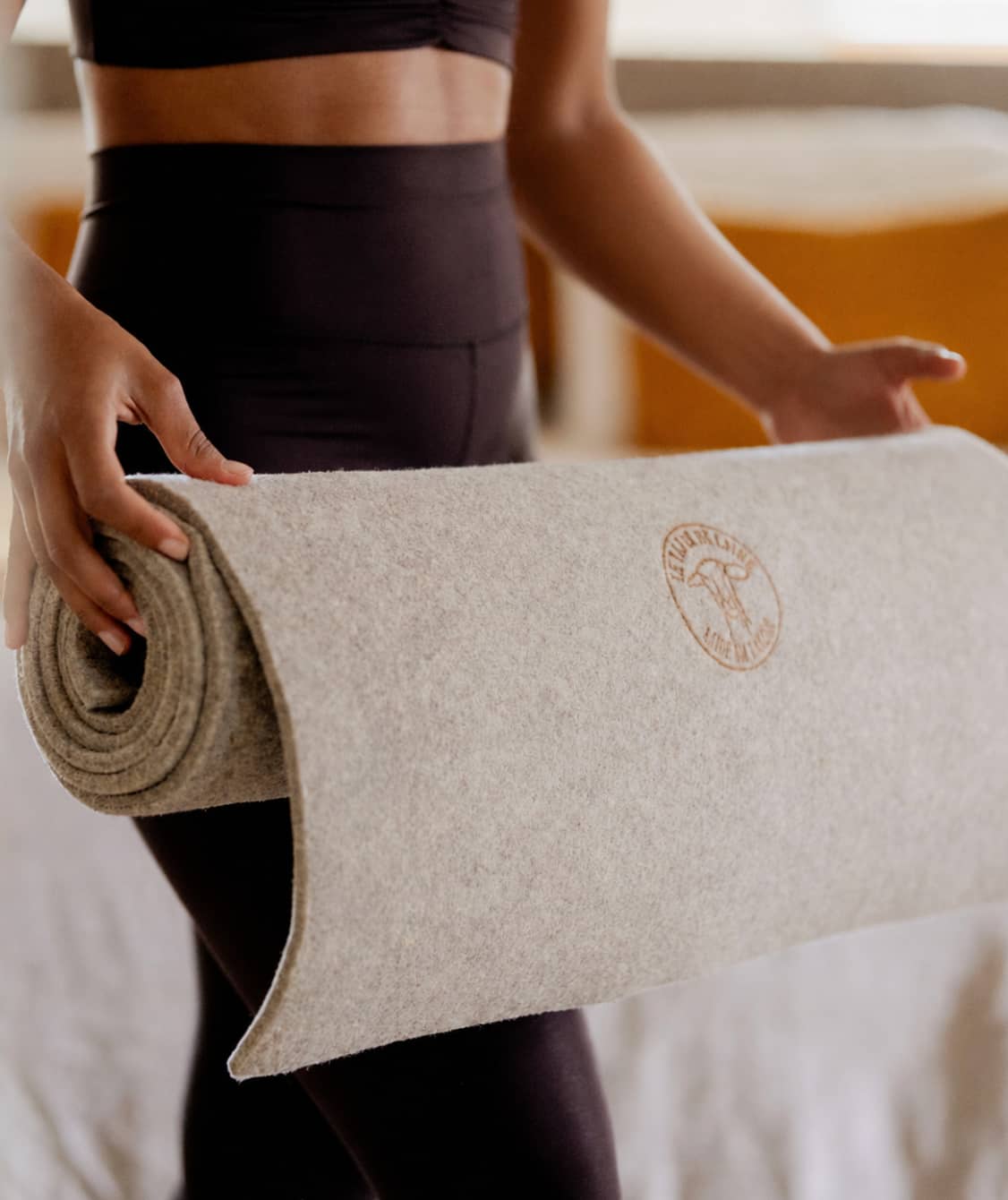
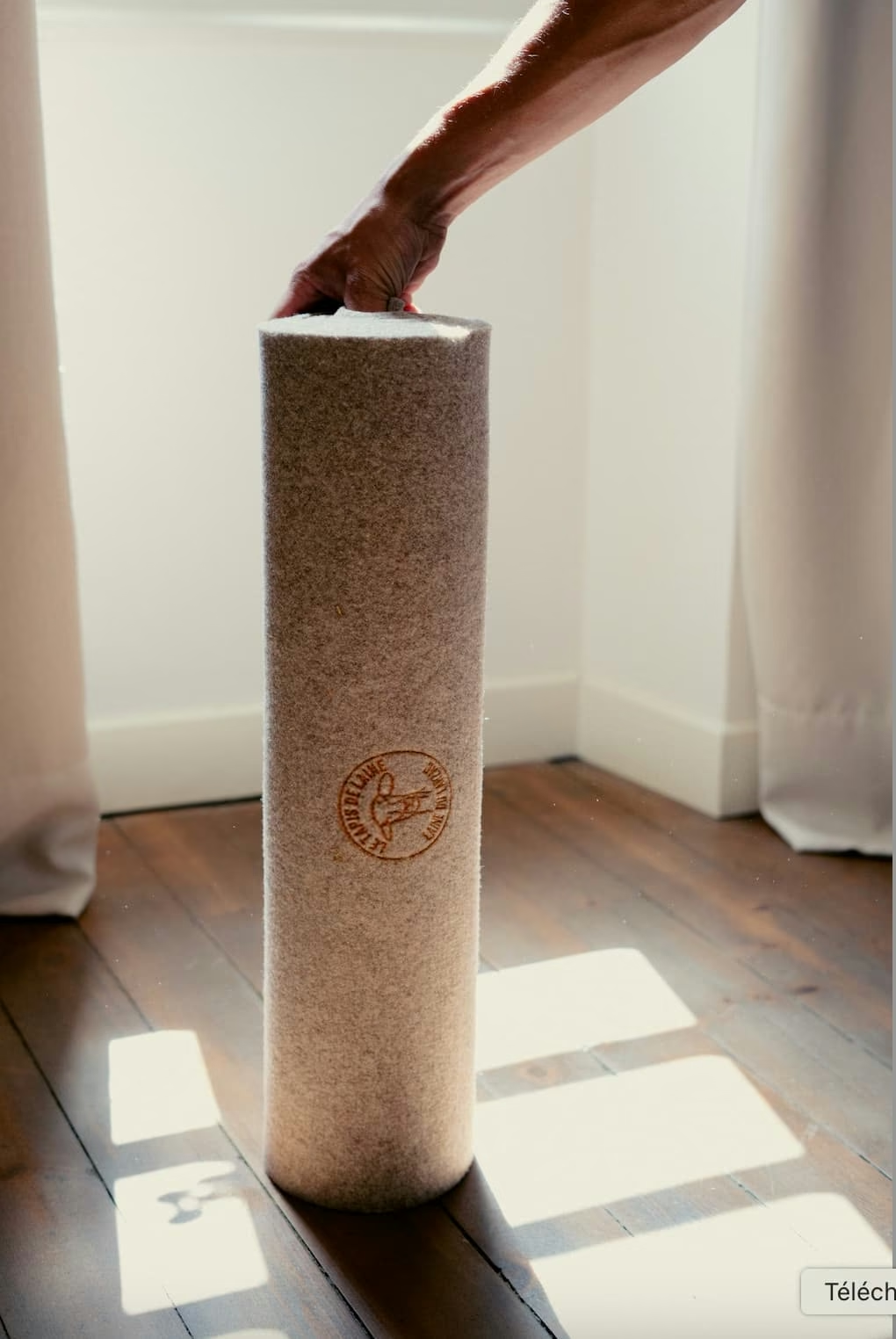
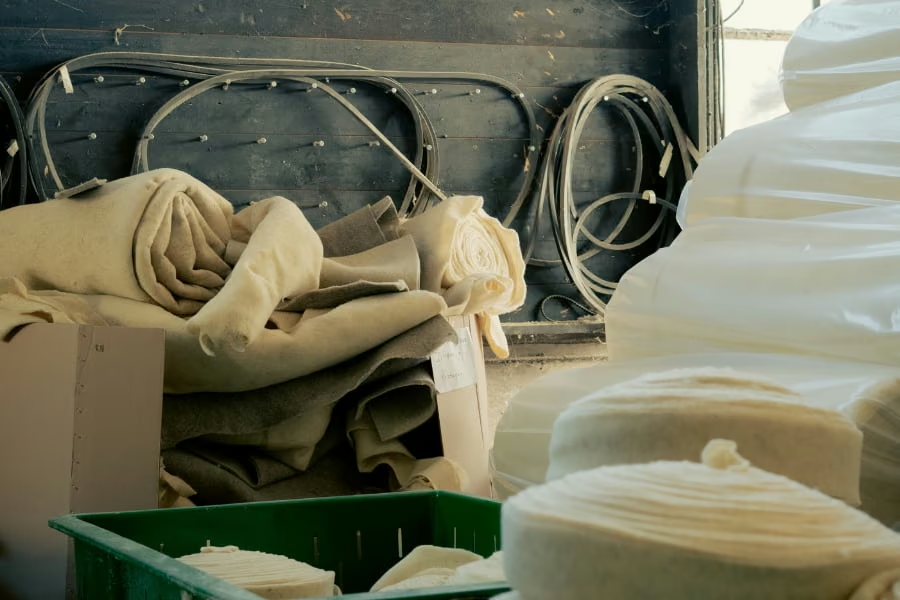
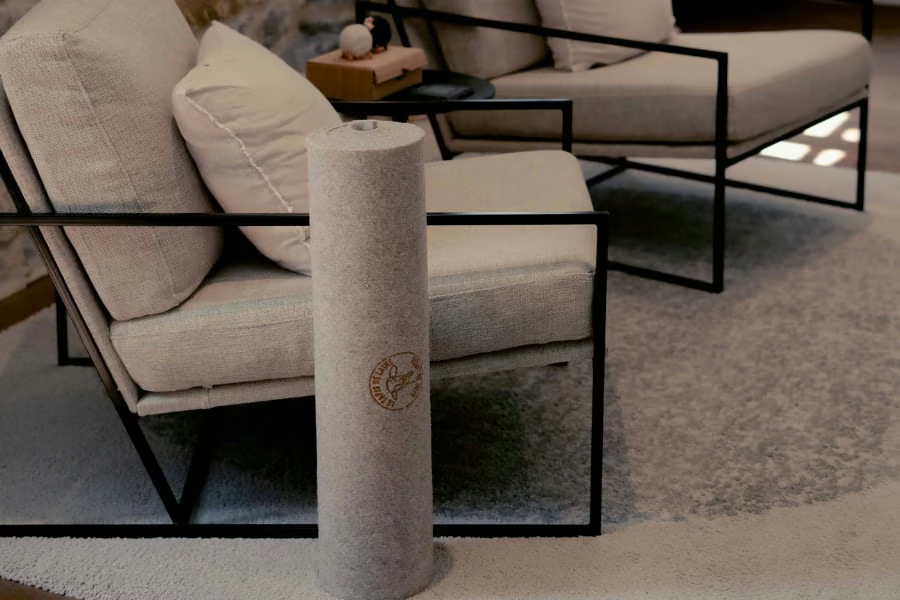
Our yoga mat is made from Lacaune sheep's wool, from farms in the Roquefort PDO area. The wool is felted at Filature Colbert in Camarès, then the mat is made in our workshop in Saint-Affrique, Aveyron. It is 8 mm thick and weighs 1.25 kg.
Against the skin, the wool stays warm and slightly textured, without the smell or sticky feel of synthetic foams. Yet 99% of yoga mats are made on the other side of the world or from synthetic materials. The 8 mm thickness cushions the sacrum, knees and spine during long holds on the floor.
82% of our customers rate the mat “very comfortable”. For somatic yoga, this comfort matters: the less you think about discomfort under your knee, the more attention you have left for sensations.
Somatic yoga routine: 20 minutes on the floor
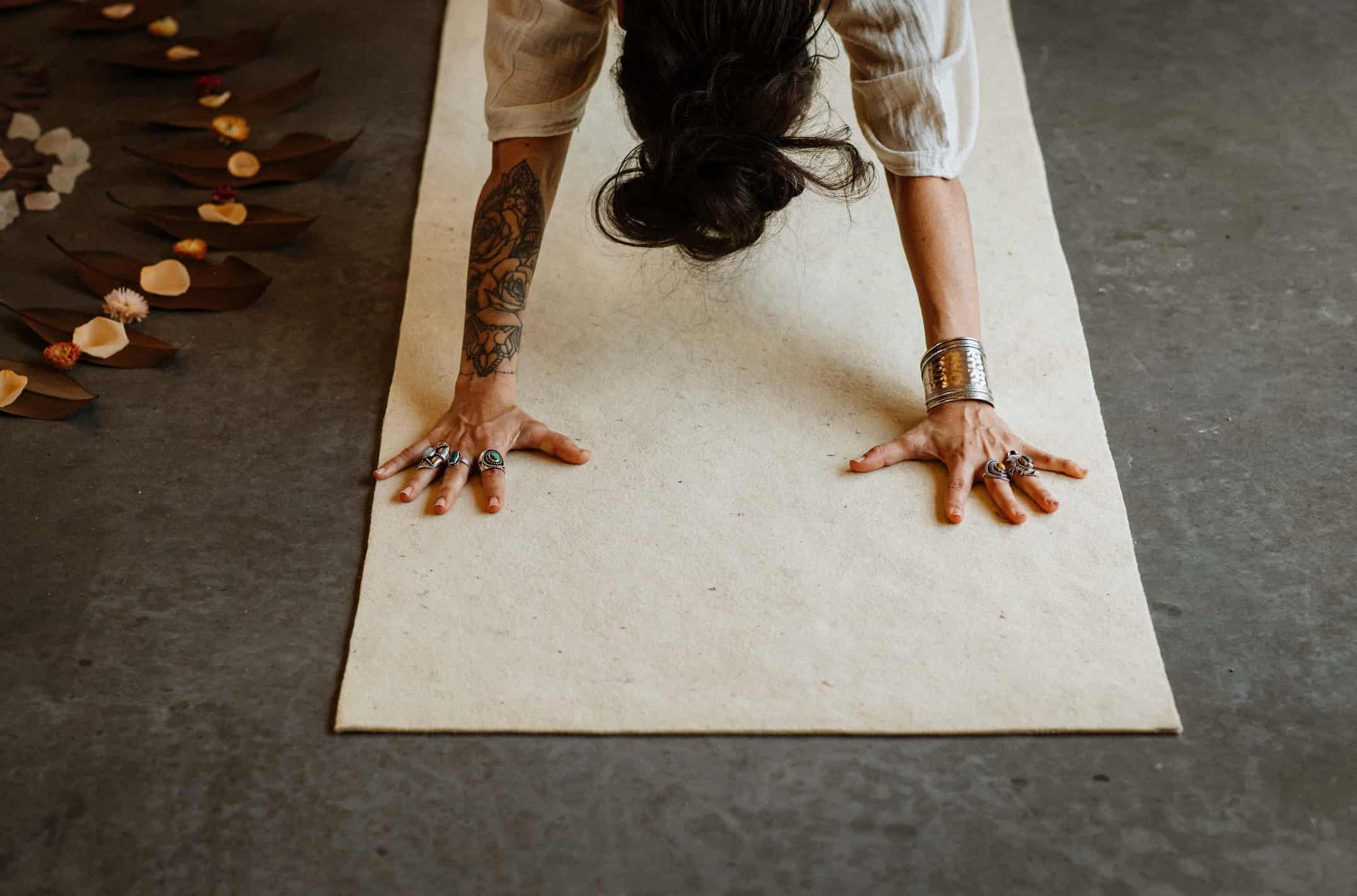
Practise barefoot and, if possible, in short sleeves, so that the skin of your arms touches the wool. Move at half your usual speed. If a movement is uncomfortable, make it smaller or stop.
1. Lying body scan (4 minutes)
Lie on your back, legs straight or knees bent. Move your attention from your toes to the top of your head, area by area. Notice the points of contact with the wool, the warmth, the tensions, without trying to correct anything.
2. Breathing at 6 cycles per minute (5 minutes)
Same position, one hand on your belly. Breathe in through your nose for a count of 4, breathe out slowly for a count of 6. That makes six breaths per minute, the rhythm studied by Sylvain Laborde's team.
3. Slow pelvic tilt (3 minutes)
Knees bent, feet flat. As you breathe in, gently arch your lower back; as you breathe out, softly press it into the mat. Make the movement three times slower than usual and feel each lumbar vertebra change its point of contact.
4. Knee windscreen wipers (3 minutes)
Feet the width of the mat apart, knees bent. Let both knees drop to one side, then the other, in time with your breath. Notice the moment your pelvis starts to follow.
5. Tactile exploration on your side (2 minutes)
Roll onto your right side, arm stretched out under your head. Very slowly slide your upper forearm over the wool, then your calf. Pause on the texture and temperature, one minute per side.
6. Child's pose (3 minutes)
Sit back on your heels, knees apart, and stretch your torso forward, forehead resting on the mat. Breathe into your back. Stay still, then come up by slowly rolling up your spine.
After the session, stay seated for a minute before getting on with your day. You can write down in one sentence what you felt: from one session to the next, the differences soon show up on paper.
Frequently asked questions about somatic yoga
What is the difference between somatic yoga and classical yoga?
Somatic yoga often uses the same poses, but the goal changes. Postural yoga aims for a shape or an alignment; somatic yoga aims to perceive what happens during the movement. Slowness and floor work are more common.
Is somatic yoga suitable for beginners?
Yes. It requires no particular flexibility or strength, since range of motion is not the goal. If you are in pain, pregnant or injured, first ask a health professional or a yoga teacher for advice.
How long should you practise somatic yoga each day?
Ten to twenty minutes a day is enough to start. Sylvain Laborde's study shows that 5 minutes of slow breathing already changes heart rate variability, as much as 20 minutes does. Regularity matters more than duration.
Which mat should you choose for somatic yoga?
A thick mat that feels pleasant to the touch, since the practice takes place mostly on the floor, in prolonged contact with the skin. An 8 mm wool mat cushions your points of contact and offers a natural, warm texture, with no smell of plastic.
Is somatic yoga a therapy?
No. It is a practice of movement and body awareness that can support well-being. It does not replace medical or psychological care, nor somatic therapies led by trained professionals.





How we make things

Somatic yoga: the trend that slows yoga down, and why wool suits it so well
Anti-stress yoga at Christmas: a gentle 15-minute routine to get through the holidays
Digital detox: a slow Pilates ritual to unplug from screens
Lacaune wool throw: meeting Lucille, weaver in Argelès-sur-Mer
Autumn yoga: 6 poses to ease into the change of season

5 mat Pilates exercises to get started at home
Pilates mats: why choose a wool mat?
Yoga nidra: why this practice is booming in 2026

Back-to-school season: how to set up a comfortable play corner for your baby
Yoga mats: the 2026 trends to know about

Yoga for back-to-school stress: what the science really recommends
What thickness should you choose for your yoga mat?
Baby's sensory development on a wool play mat: what the science says (0–12 months)
Wool or synthetic play mat: what the numbers show
Natural yoga mats: wool, cork, jute or rubber — which should you choose?
Why wool is the best-performing material for a yoga mat
Which yoga mat should you choose for your practice: yoga, pilates or meditation?


