.avif)

.svg)
Which yoga mat should you choose for your practice: yoga, pilates or meditation?
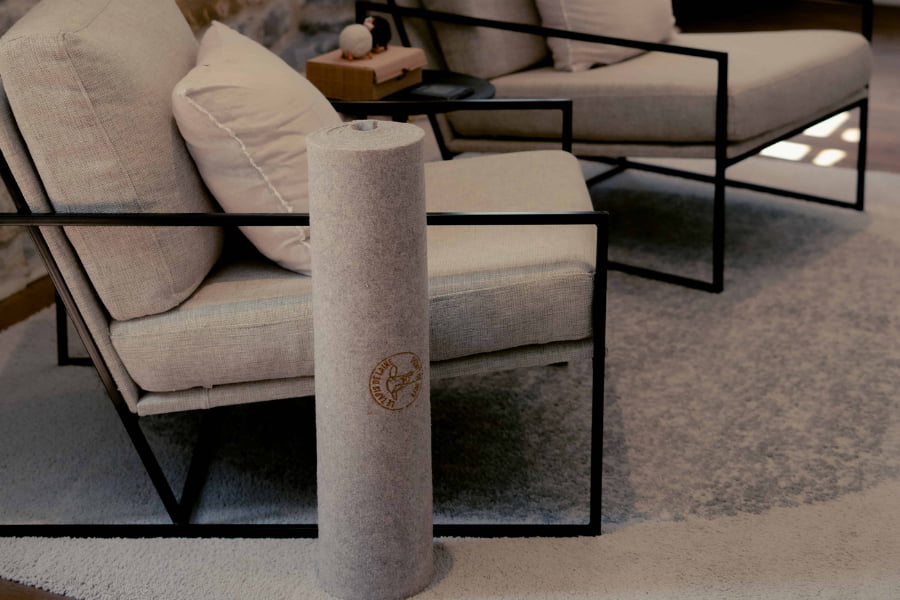
Yoga, pilates or meditation mat: which wool suits your practice? Thickness, density, grip — our advice for choosing well.
The right mat depends on your discipline: a thick, strongly non-slip mat for dynamic yoga, a dense, stable wool mat for pilates, and a soft, comfortable wool mat for seated meditation. Non-slip texture is the criterion both dynamic practices share, but how much of it you need changes with the effort involved — and natural wool answers that need differently from most other materials.
Why grip matters differently in each discipline
A mat that slips in a standing posture does not have the same consequence as a mat that slips in seated meditation. In the first case, the risk is a fall or a repeatedly poor posture. In the second, it is mainly comfort that suffers.
Grip depends on three factors: the surface material, its texture, and how it reacts to contact with sweat. A natural rubber mat grips better as soon as the skin becomes damp, whereas a smooth PVC mat loses grip in the same conditions. Natural wool follows a different logic: the notching and crimping of the fibre create the grip, independently of how much you sweat. That is what lets it stay stable in intense use and in prolonged static positions alike, without depending on moisture to hold. We explain the mechanism in our article on the technical properties of wool.
Yoga: grip in movement comes first
Dynamic yoga — vinyasa, ashtanga, power yoga — chains rapid transitions between postures, often weight-bearing on hands and feet. A mat that is non-slip and textured across the whole surface, front and back, becomes non-negotiable here.
What to look for:
- A thickness of 4 to 8 mm, to cushion the joints without losing stability on the floor.
- A textured surface with a fine grain, which maximises skin-to-mat contact.
- A natural fibre whose grip does not depend on sweat.
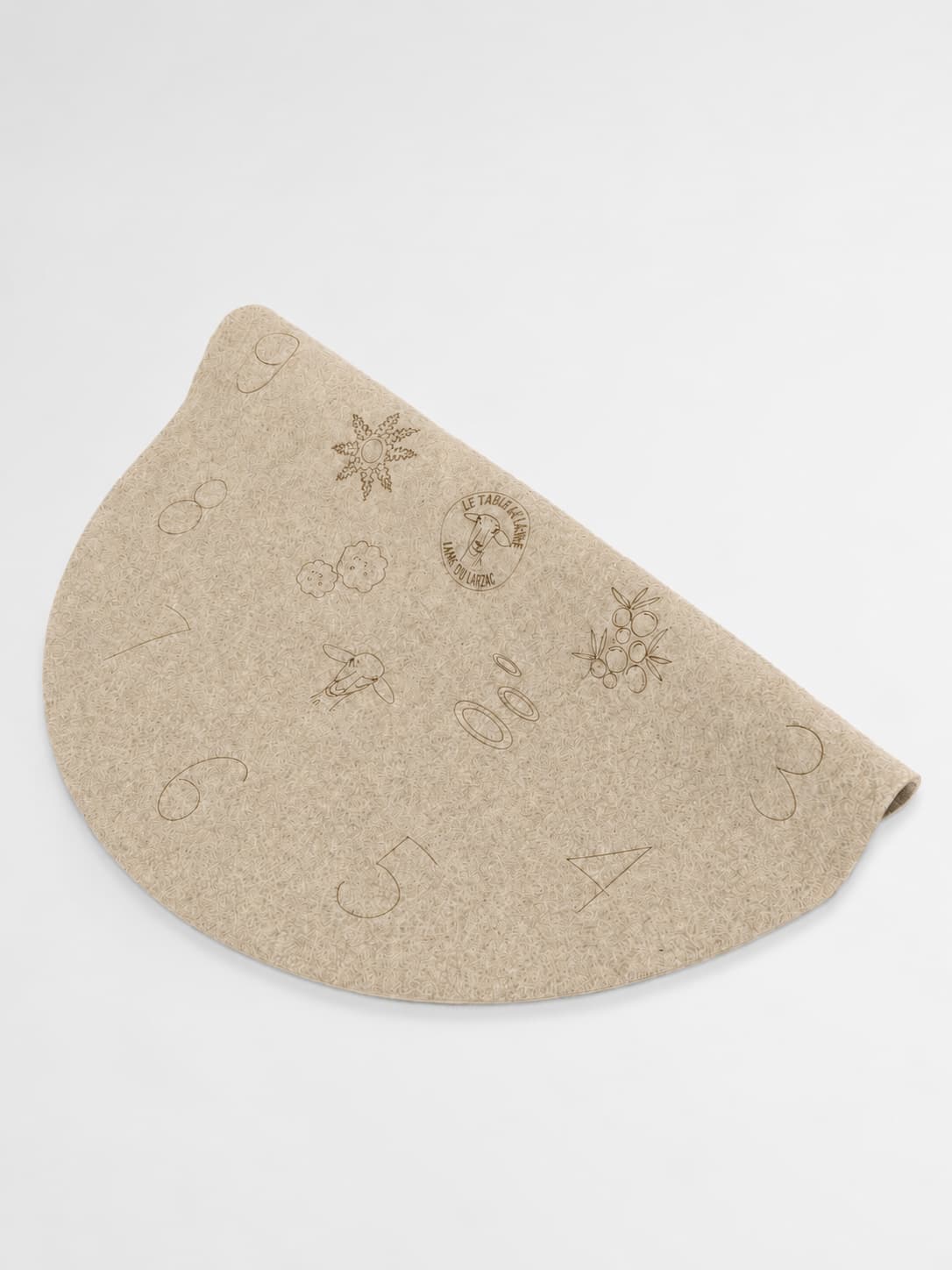
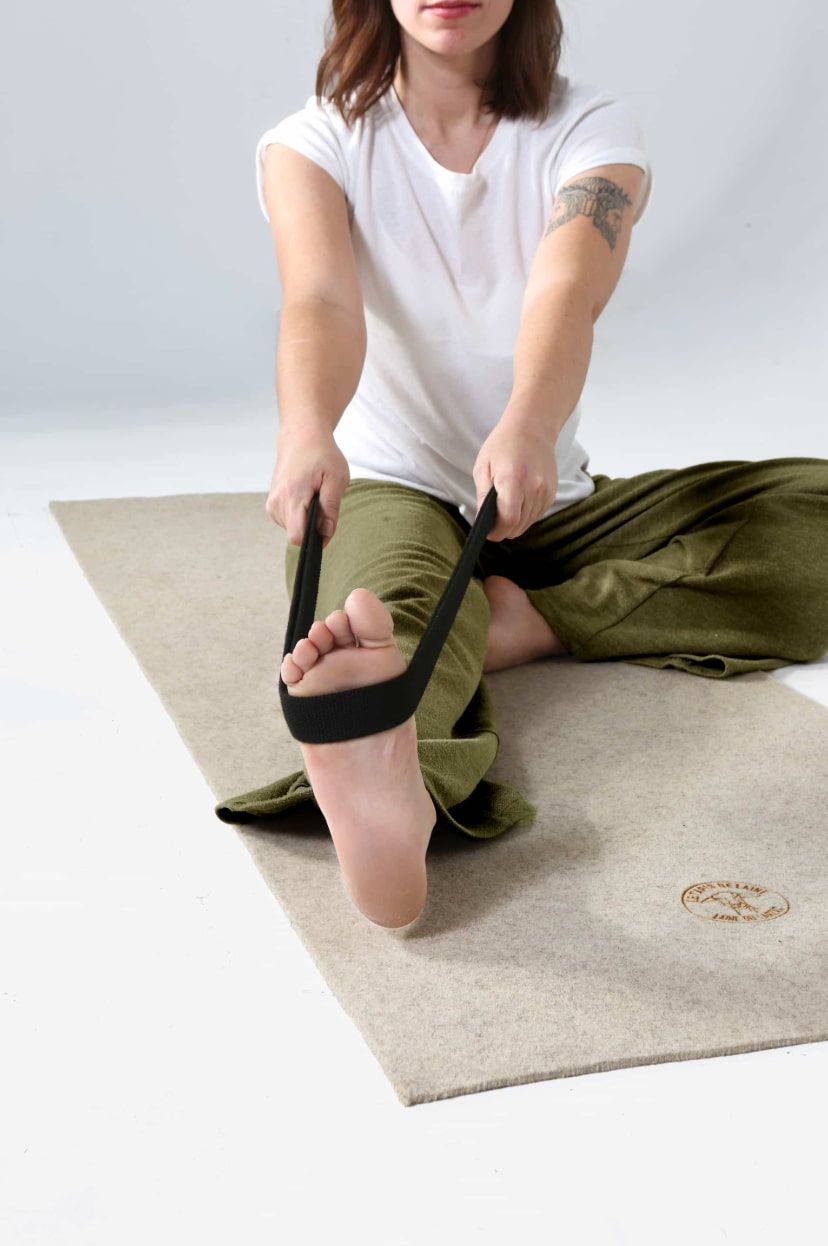
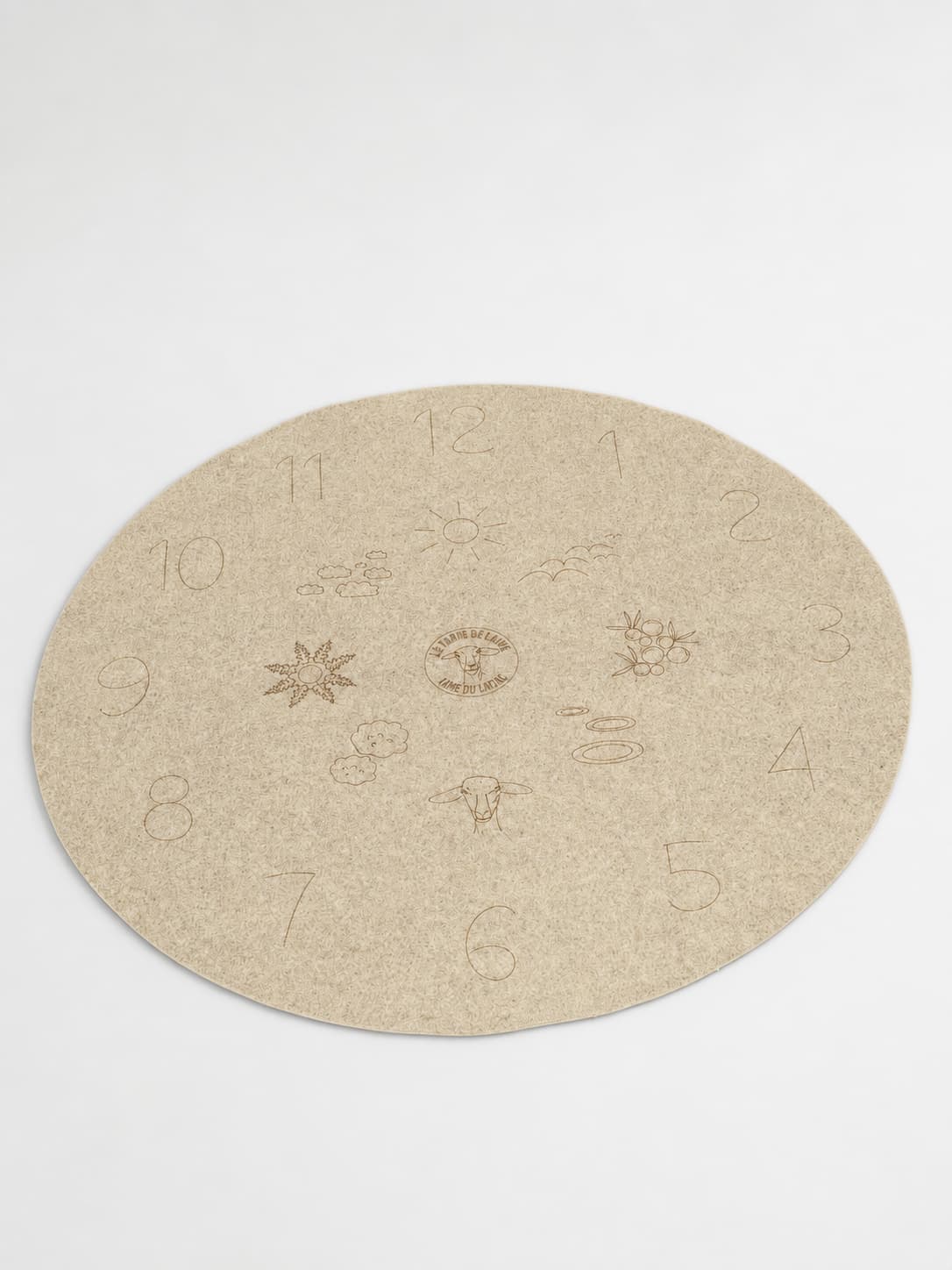
Our natural wool yoga mat is built for this use: 8 mm thick, with a micro-textured surface that keeps its grip even in an intense session, thanks to the grain inherent to the wool fibre rather than any chemical surface reaction. To place your postures precisely, the alignment mat adds markers engraved into the material.
Pilates: stability above all
Pilates involves fewer floor transitions than dynamic yoga, but demands perfect anchoring during floor work and with props — ring, ball, resistance band. The mat must stay put, even as body weight shifts onto a small point of support.
A mat that is too thin or too soft absorbs the point loads of a pilates exercise poorly, tiring the wrists and knees faster than a dense mat would.
What counts in pilates:
- The density of the wool rather than thickness alone: a firm mat prevents uneven sinking.
- A reinforced non-slip base, because the mat must not slide on laminate or tiled floors.
- A surface that stays stable even with props resting on it.
The dense felt of our wool mat and its non-slip coating on both faces meet that need for anchoring, holding through a full session without sinking unevenly.
Meditation: comfort and static stability
In seated meditation, the issue is no longer dynamic grip but stability over time. The body stays still, sometimes for 20 to 40 minutes, and a mat that is too thin or too hard quickly becomes uncomfortable around the hips and ankles.
This is also where wool's own qualities count most: its breathability and its ability to regulate temperature prevent the build-up of heat that comes with a prolonged position, unlike synthetics that trap moisture.
Criteria for meditation:
- A wide base, to anchor a meditation cushion.
- A breathable material, since holding a position generates more heat than movement does.
- A good firmness-to-softness balance, supporting the hips without creating painful pressure.
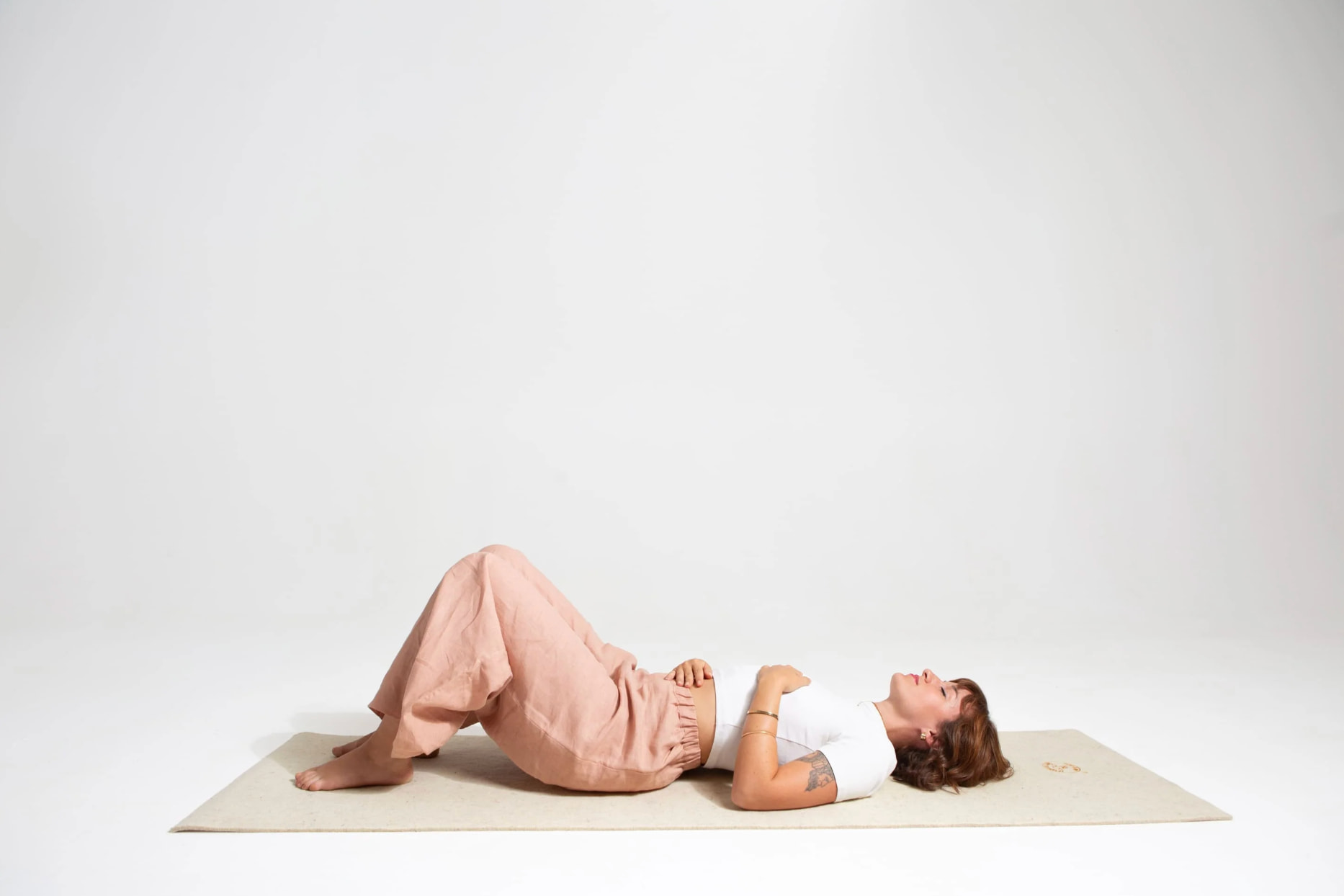
Our wool meditation mat is 100% wool with no non-slip layer: moderate padding and the natural breathability of the fibre, designed for long sessions rather than for cushioning movement.
Still unsure about the material?
Choosing by discipline is only half the question; the material is the other half. We compared the four natural options — wool, cork, jute and rubber — on grip, comfort, temperature regulation and lifespan.
Ready to find the wool mat that fits your practice? See all our mats.
.svg)


How we make things
.avif)

Rentrée : comment installer un coin d'éveil confortable pour bébé
Tapis de yoga : les tendances 2026 à connaître
%20(1)%20(1).jpg)
Yoga anti-stress de rentrée : ce que la science recommande vraiment
Quelle épaisseur choisir pour son tapis de yoga ?
.png)
L'éveil sensoriel du bébé sur un tapis en laine : ce que dit la science (0-12 mois)
Wool or synthetic play mat: what the numbers show
Natural yoga mats: wool, cork, jute or rubber — which should you choose?
.jpg)
Why wool is the best-performing material for a yoga mat
Which yoga mat should you choose for your practice: yoga, pilates or meditation?

.svg)
.svg)
.svg)
.svg)
.svg)
.svg)