.avif)

.svg)
Wool or synthetic play mat: what the numbers show
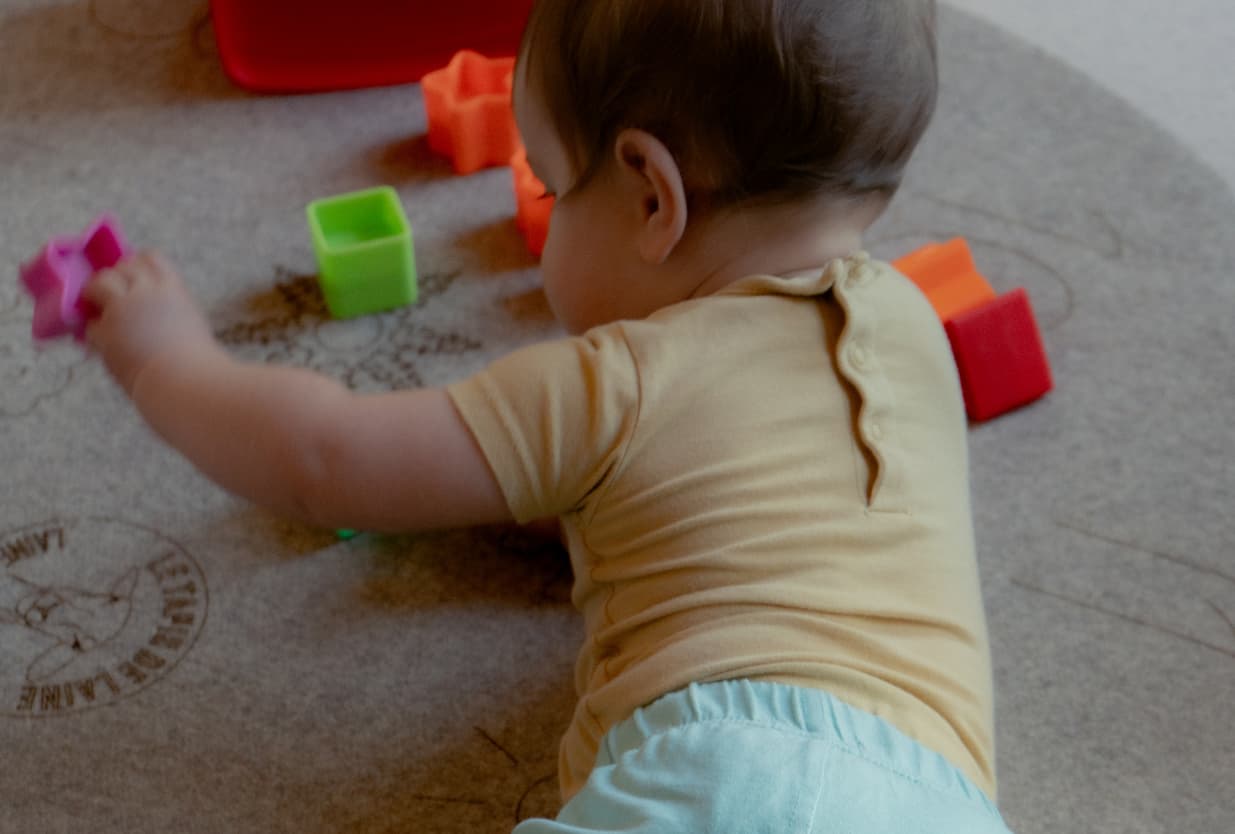
Wool vs synthetic play mats: the numbers compared.
A wool play mat eliminates the need for chemical flame retardants, absorbs up to 35% of its weight in moisture without feeling damp to the touch, and biodegrades in a few months rather than several decades. These three measured, documented differences explain why wool stands out against synthetic foams when it comes to safety and durability.
Wool needs no added flame retardant
The foams used in most play mats (polyethylene, EVA, polyurethane) have a limiting oxygen index (LOI) of 17 to 18%. A material ignites spontaneously in open air as soon as its LOI drops below 21%, the oxygen level of the atmosphere. These foams are therefore intrinsically flammable, before any treatment.
To pass safety tests, manufacturers add brominated flame retardants (PBDEs) directly into the foam. It is a chemical treatment applied after the fact, not a property of the material.
Wool works the other way round. Its high nitrogen and bound-water content requires more oxygen to ignite, it does not melt, does not drip onto the skin and self-extinguishes within seconds once the heat source is removed, according to the International Wool Textile Organisation (IWTO). No additive is needed to achieve this.
This difference has measured consequences. A 2025 study by a University of Toronto team detected semi-volatile compounds in all 16 children's foam mattresses tested: one exceeded Canadian regulatory limits, another contained a flame retardant banned in Canada since 2014.
Prenatal exposure to PBDEs has documented consequences on child development. A study of 309 pregnant women followed at Cincinnati Children's Hospital established that a 10-fold increase in maternal PBDE exposure is associated with a 4-point drop in IQ at age 5 and with hyperactivity between ages 2 and 5. “We observed that maternal PBDE exposure was associated with cognitive deficits at 5 years and hyperactivity at 2 to 5 years,” summarises Aimin Chen, the study's principal investigator at the University of Cincinnati.
Wool regulates moisture, foam traps it
A baby who drools, sweats or spits up on their play mat puts the material to the test several times a day. Wool absorbs up to 35% of its own weight in water vapour without feeling damp to the touch, a capacity synthetic fibres do not have.
On moisture management, wool outperforms polyester by 96% and cotton by 45%, according to data published by Woolmark. “Wool responds in real time to changing physiological needs,” explains John Roberts, CEO of Woolmark, highlighting its ability to keep skin temperature stable during activity and at rest alike.
For an 8 mm play mat, this gap translates directly at skin level: synthetic foam traps heat and moisture, while wool wicks perspiration away continuously without abruptly cooling the child after a phase of activity.
Naturally hostile ground for dust mites
Dust mites need high humidity to thrive. Wool's fibrous structure absorbs moisture into its core rather than at the surface, which limits the moisture available on the surface of the mat.
According to tests run by British manufacturer Woolroom, wool bedding reduces dust-mite allergens by up to 99%. That figure remains manufacturer data, not a published independent study, but it matches a well-established principle: wool is structurally less hospitable ground for dust mites than foam or synthetic down.
An end of life in months, not decades
A 100% wool fabric biodegrades by 95% after just 15 weeks buried in soil, according to research published by Woolmark. In natural conditions, complete degradation generally takes between three months and a year.
Synthetic fibres, on the other hand, persist for decades in the environment. A 2020 study by AgResearch showed that wool biodegrades in the marine environment without releasing microplastics, unlike fibres treated with synthetic resins. By comparison, a single polyester fleece garment releases more than 1,900 microfibres with every wash.
This end of life is not theoretical: the French wool industry is already organising concrete outlets for used wool. Fertilaine, a company in Occitanie, turns sheep's wool rejected by the textile industry into 100% natural fertiliser and garden mulch — proof that the material keeps its value beyond the mat itself.
Wool traced back to the farms of the Roquefort PDO
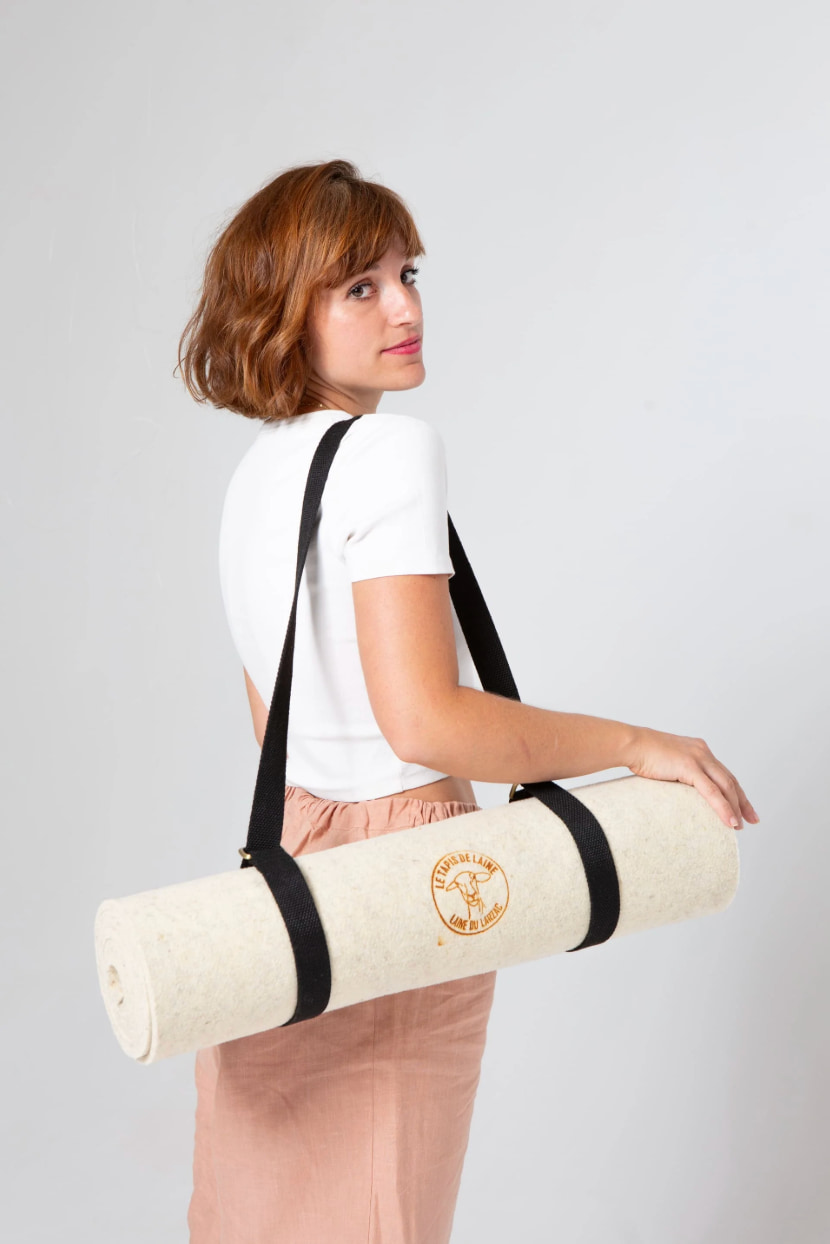
At Le Tapis de Laine, the raw material comes from farmers located within the Roquefort PDO area, which covers six French departments around the Larzac plateau: Aveyron, Aude, Gard, Hérault, Lozère and Tarn. These are the same sheep-farming areas that supply the ripening cellars of Roquefort-sur-Soulzon.
These farmers raise Lacaune ewes, a breed selected for generations for its milk production rather than its fleece. On a dairy farm, wool remains a secondary by-product.
Working directly with this supply chain gives this wool a second life and guarantees a verifiable geographical origin, just a few kilometres from the very places where Roquefort PDO cheese is made.
Frequently asked questions
Is a wool play mat really safer than a synthetic foam mat?Chemically, yes: it requires no added flame retardant. Synthetic foams have an LOI of 17 to 18%, below the threshold for spontaneous combustion in air (21%), which forces a chemical treatment to pass safety tests.
Is wool suitable for a baby with sensitive skin?True wool allergy is rare and distinct from dust-mite allergy. Wool's low surface moisture retention makes it less favourable ground for dust mites, a frequent cause of skin and respiratory reactions in young children.
How long does EVA foam take to degrade?Several decades, versus three to twelve months for a wool fabric buried in soil, according to biodegradation data published by Woolmark.
.svg)


How we make things
.avif)
Yoga Nidra : pourquoi cette pratique explose en 2026

Rentrée : comment installer un coin d'éveil confortable pour bébé

Tapis de yoga : les tendances 2026 à connaître
%20(1)%20(1).jpg)
Yoga anti-stress de rentrée : ce que la science recommande vraiment
Quelle épaisseur choisir pour son tapis de yoga ?
.png)
L'éveil sensoriel du bébé sur un tapis en laine : ce que dit la science (0-12 mois)
Wool or synthetic play mat: what the numbers show
Natural yoga mats: wool, cork, jute or rubber — which should you choose?
.jpg)
Why wool is the best-performing material for a yoga mat
Which yoga mat should you choose for your practice: yoga, pilates or meditation?

.svg)
.svg)
.svg)
.svg)
.svg)
.svg)